Flash player not installed or Javascript disables.

Weather in Venice

Temp: 16°C
Wind: 4.1mps
 
Newsletter

Venetian Itineraries
  • Venetian Itineraries
  • Jogging at the Museum...
    Did you ever think to have a Jogging session inside a
    Read more...
  • Venice and its door on the mainland: the "Sestiere di Santa Croce"
    The sestiere of Santa Croce is the easiest part of the
    Read more...
  • Discover Cannaregio District
    The Cannaregio quarter (sestiere) is washed on the northern side by
    Read more...
 

Murano Island

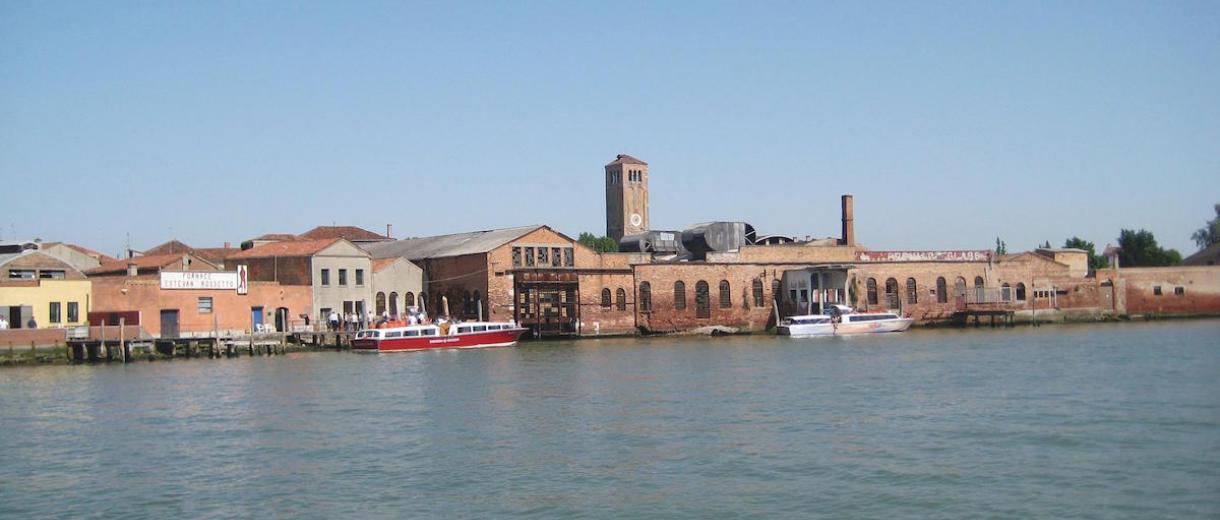
Murano Island It's probably the most famous island of the venetian Lagoon, it's composed by seven minor islands. It is well known worldwide for the art of blowing glass...


...all glass factories were moved to the island of Murano in 1295 to preserve the city from fires that often were caused by factories themselves.

Murano was at first inhabited by refugees coming from Altino right after the barbarian invasion. Today it is completely urbanized and counts on 5500 inhabitant. Until 1171, when it was annexed to the Santa Croce district, the island was autonomous. In the year 1275 part of the autonomy was returned to the island's government, so they could promulgate laws and even coin their own money (the Osella).

The autonomy of Murano was maintained also during the Austrian domination, that made of it a municipality. During the Austrian occupancy many churches and monasteries were sacked and destroyed so that only three now are left.
The Murano municipality (that includes San’t Erasmo and Vignole islands) was suppressed in 1923 and the territory unified with the Municipality of Venice.

The Art of blowing glass was an inestimable richness for the Serenissima Republic. The factories were moved to the Island not only to preserve the city from the fires but also to protect the art form unwanted eyes and ears.
The glass masters were forced to live on the island and couldn’t leave the city unless they had a special pass. It is thought that Bohemian Crystals (in the XV century they seriously attempted at the economy of the island) were inspired to the Murano glass.
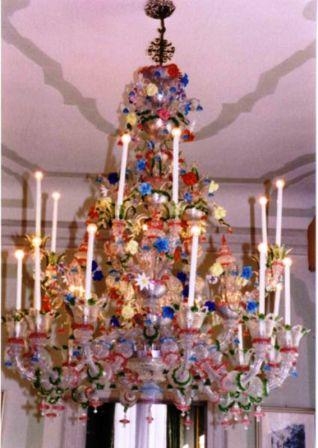


To become Murano citizens it was necessary to be born there or to have bought a house on the island. In 1602 the Golden Book was created to register the islanders. People not registered couldn’t work in the factories and couldn't attend councils and didn't have the same rights of those born there.

Today in the Island there are three churches left, Santa Maria e Donato, San Pietro Martire and Santa Maria degli Angeli. Anyway, before Napoleon's invasion there were 18 of them in total!!!.

The Church of Santi Maria and Donato (in the beginning was dedicate to Mary only) was built in the VII century. The present name dates back to 1225, when the mortal rests of Donato were brought from Cefalonia and buried in the Church.

The Church has one nave and two aisles convergent to the central apse and the floor made in mosaic is beautiful.
The Church of St. Peter the martyr, on the “Rio dei Vetrai”, was founded in 1348 in honour of John the Baptist, burned down and rebuilt in 1511 and dedicated to Peter the martyr.

It is composed by one nave and two aisles divided by a marble colonnade. Most of the operas were stolen by Napoleon, however there are still many precious and inestimable works of art (worth to be mentioned are the canvas painted by Giovanni Bellini, the Assumption of the Virgin and the Saints, the Doge Barbarigo introduced to the Virgin and the famous chandeliers made of glass).

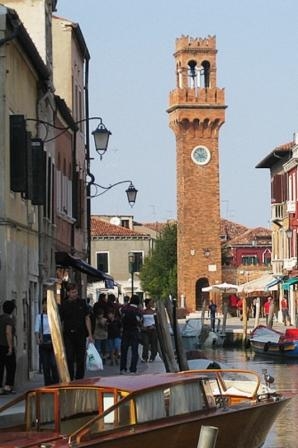
The Church of “ Santa Maria degli Angeli” stand in an extreme point of the island facing the homonymous canal. Built in 1188 and rebuilt during 1500 (the bell tower 31 meters tall is from that era), it was enriched with paintings on canvas and precious jewels, mostly moved later to the church of  “Santi Maria e Donato”. In 1574  Enry III king of France and Poland visited the church.

To be mentioned (and to be visited too!!) is “Palazzo Giustinian”, now Glass Museum , “Palazzo da Mula" (its gothic façade mixes the venetian and byzantine style of the XII century), and the lighthouse, whose light combined with a game of mirrors points to the port access of the Lido.   


booking on line
Arrival date
Nights Adults: Special code:
Rooms: Children:
Special Offers
Sleep in Venice
  • Sleep in Venice - Some proposal
  • Cą Bollani
    Esteemed apartment , facing Rio Della Pietà and Ca’
    Read more...
  • Palazzo Stern ****
    Few steps from Saint Mark's Square and from Accademia,
    Read more...
  • Locanda Vivaldi ****
    Relive the magic of ancient Venice and the splendour
    Read more...
  • Residenza Parisi
     Parisi Residence in Venice can be found in the historic
    Read more...
  • Hotel Santa Chiara ***
    Situated in an ancient and more than 500 years
    Read more...